

The market for external hiring has changed. Less hustle and bustle. More choice. And above all: more responses per assignment. Where clients previously had to chase talent, the balance is now visibly shifting. Our Talent Monitor makes this clear: the labour market for professionals is moving towards a buyer's market. This changes the playing field and your negotiating position.
More responses, less silence
Nearly every assignment receives responses nowadays. Assignments without applications are hardly seen anymore. The number of bids per assignment is even four times higher now than at the lowest point during the coronavirus pandemic.
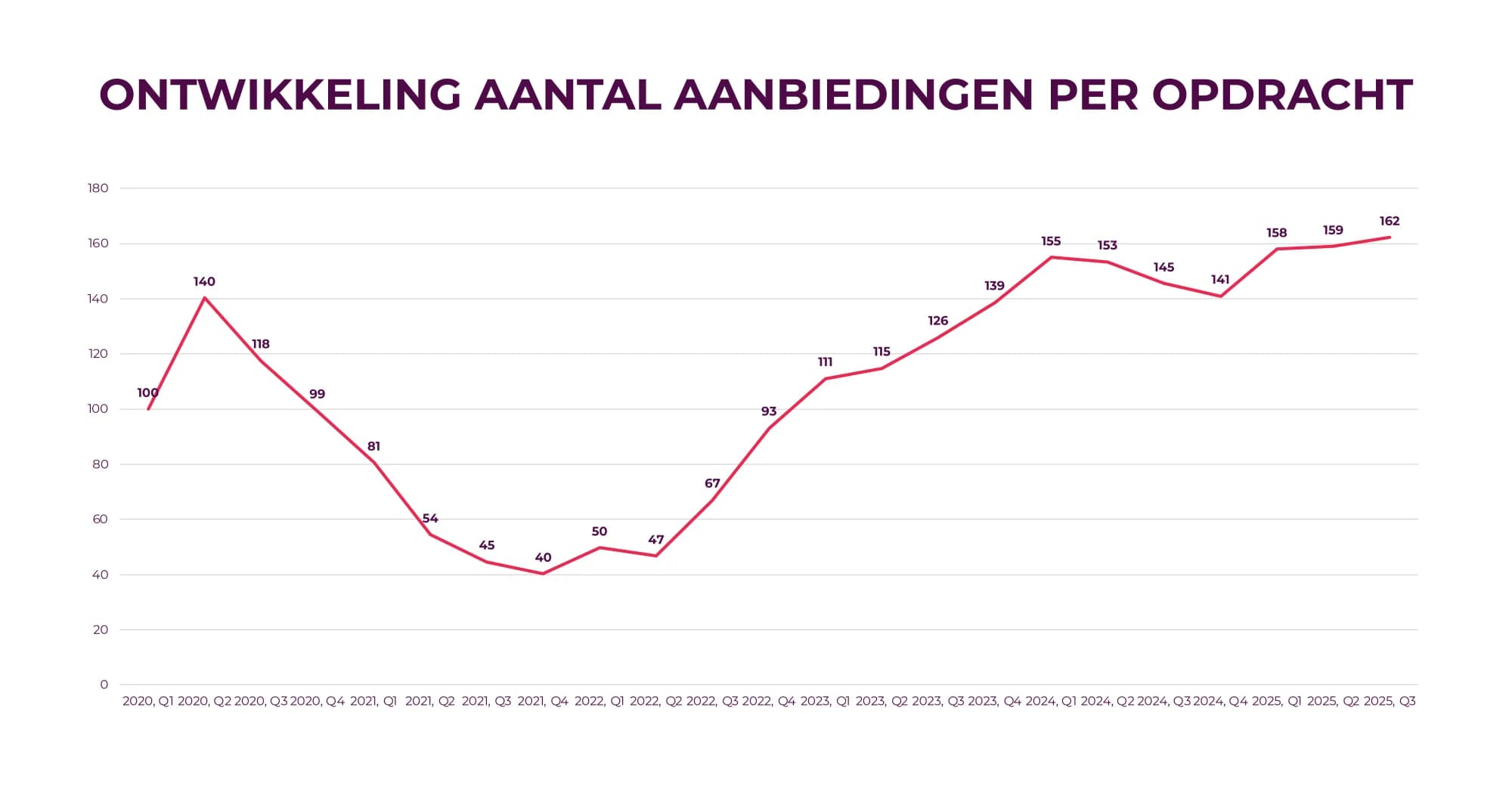
This means: more choice for you as a client. Not just more profiles, but also more variety in experience, background, and fees. This requires sharper selection and at the same time gives you the space to manage more deliberately.
The shift after years of scarcity
Scarcity dictated the market for years. Professionals had the leeway to dictate terms. Fees rose quickly and negotiations were limited. That phase seems to be over. Our Talent Monitor shows that scarcity is decreasing and labour market activity is increasing.
Nearly one in four self-employed professionals is actively seeking a new assignment. This indicates more movement and more competition on the supply side. Professionals are looking more critically at certainty, the duration of assignments, and opportunities for growth.
What does this do to the fees?
The growth of fees is levelling off. In some segments, fees are even stabilising. This is not due to declining quality, but due to the changing balance between supply and demand. More supply per assignment increases the negotiating space.
This creates a more realistic fee level for clients. Market-conform, substantiated, and more explainable internally. This helps with budget control and planning, especially for longer programmes and projects.
The differences per segment remain significant
The buyer's market does not apply equally everywhere. In specialist niches and senior roles, demand remains high. Consider healthcare, policy, and parts of finance. There, speed remains important.
In broader profiles and support roles, you do see many responses per assignment. This requires a different approach. Less chasing, more choosing. Fewer concessions, more focus on quality and match.

Secondment takes on a different role
Part of the explanation lies in the way secondment is used. Whereas previously secondment was used to address scarcity, the role is now shifting towards flexibility and risk management.
This offers alternatives. You can switch faster, without being immediately tied to long-term hiring structures. In this market, it is less about finding available talent and more about deploying the right people.
What does this mean for your strategy?
The shift to a buyer's market requires adjustments in your hiring policy. Not faster, but smarter. Our Talent Monitor highlights three key points:
- Sharper selection based on content and added value
- More conscious management of rate and contract type
- Looking ahead to availability instead of reacting to scarcity
More control, less pressure
The current market offers you the space to make choices. Room to have discussions about the rate, duration, and result. And room to better align external hiring with your broader personnel strategy.
This does require up-to-date insights. Because this market moves quickly. What seems like a buyer's market today could shift in specific segments by tomorrow.
Look beyond today
2026 is emerging as a year of repositioning. Less driven by panic or scarcity, more by data and foresight. Organisations that are already considering this are leading the way.
Do you want to know exactly how these trends are developing per sector, role, and rate level? In our Talent Monitor, you can read all the figures, analyses, and expectations that help you make informed choices.