


Demand moves with the market
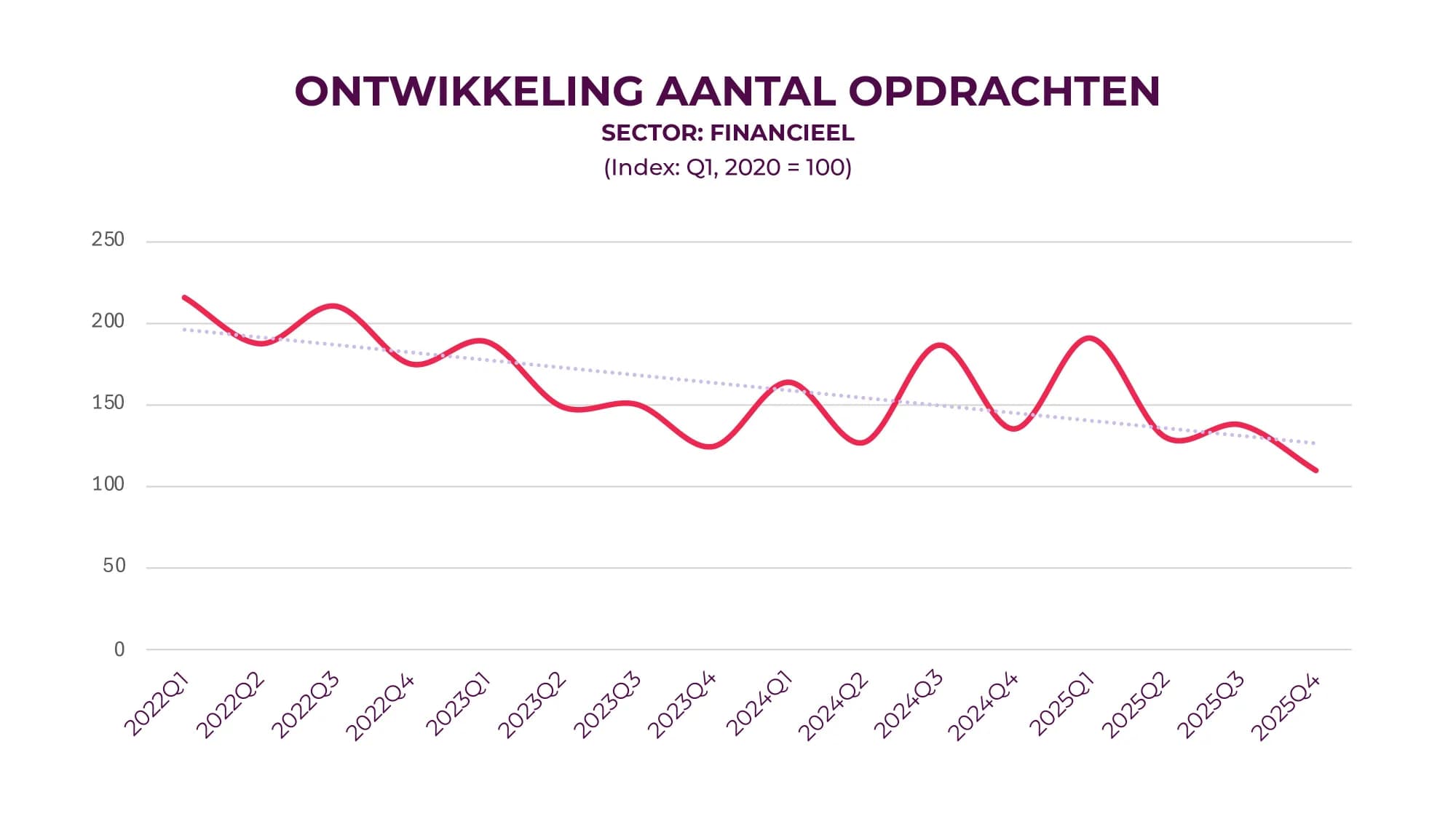
In addition to rate developments, demand for professionals also shows clear fluctuations. In 2022, the number of assignments was exceptionally high. In the first quarter, 695 assignments were posted, and in the third quarter, 678. In 2023, demand stabilised at a lower level, with an average of around 493 assignments. In 2024, fluctuations followed again, including a clear upturn in the third quarter with 601 assignments.
The year 2025 started strongly with 615 orders, but ended with 354 orders in the fourth quarter. The average for the whole year was 458 orders.
Source: CBS, compiled and analyzed by the Intelligence Group
Changing priorities within financial institutions
Digitization, stricter legislation, and new sustainability targets are changing the way financial organizations operate. Many institutions are investing in data analysis, risk management, and compliance programs.
This requires professionals with specialist knowledge. Organizations are also taking a more critical look at their external hiring and projects are increasingly being organized on the basis of long-term planning. As a result, external professionals are being deployed in an increasingly targeted manner. Not only to fill temporary capacity gaps, but above all to add specific expertise to strategic projects.
Looking ahead in a dynamic market
The combination of fluctuating demand and rising rates calls for clear planning. Identify in good time what expertise is needed and when projects will start. This will prevent important initiatives from being delayed because specialist knowledge is not available. It also helps to consciously choose how you deploy external professionals. Some projects require a short, intensive contribution from a specialist. Other projects benefit from a professional who works within a team or program for a longer period of time.
By looking ahead and organizing flexibly, your organization will remain capable of successfully implementing innovation and change processes.
Talent Monitor: insight into a changing sector
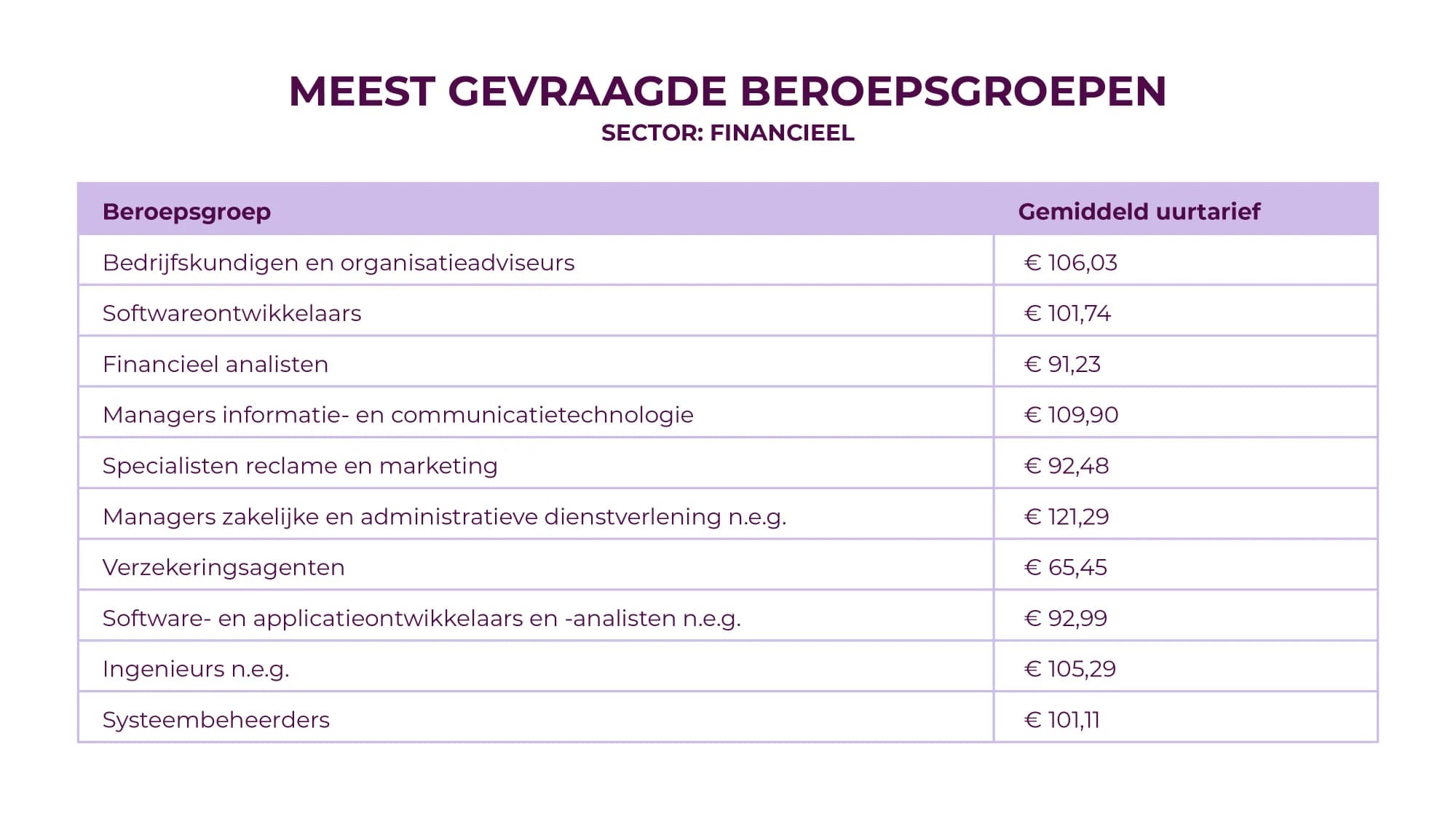
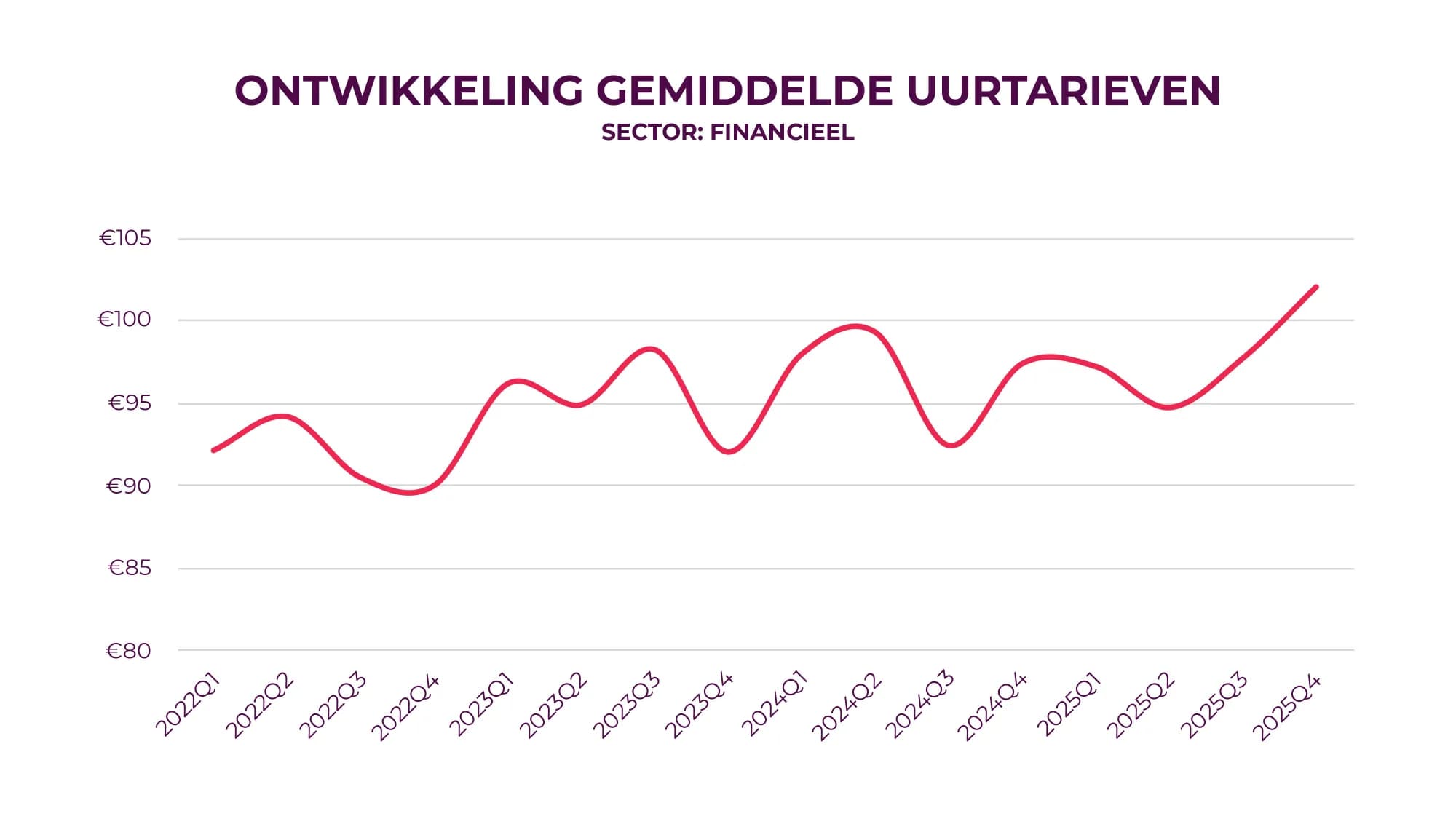
The Talent Monitor, a joint publication by HeadFirst Group and Intelligence Group, provides a quarterly overview of how demand, rates, and expertise are developing within various sectors. The research paints a clear picture for the financial sector. Specialist knowledge in IT, data, finance, and consultancy remains in high demand. Rates are rising slightly, while the number of assignments can fluctuate significantly due to economic developments and investment cycles.
For financial organizations, this means that strategic use of external expertise is becoming increasingly important. Those who follow the market closely and plan ahead will remain able to pursue innovation, compliance, and digital transformation.