



Demand volumes fluctuate
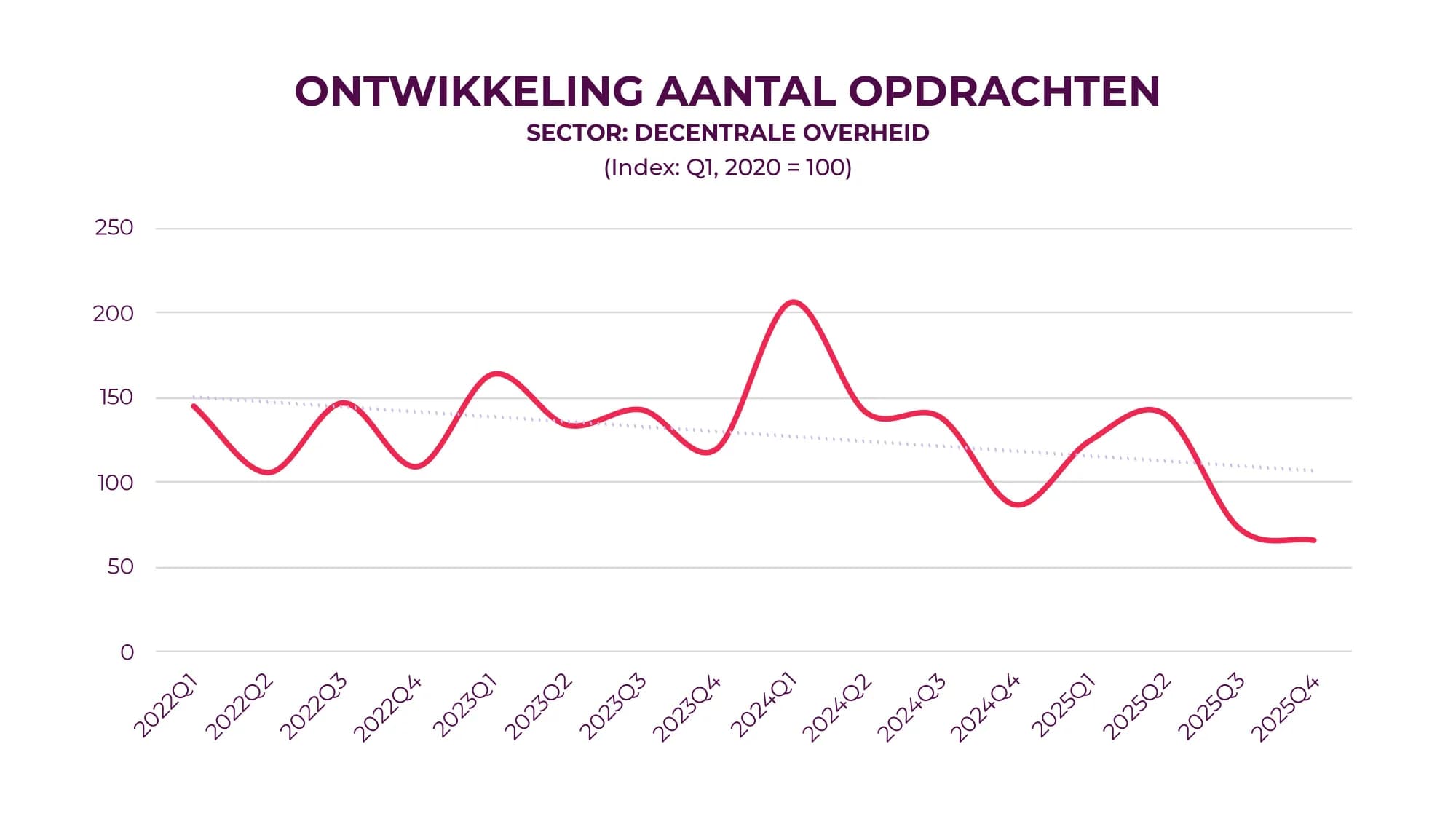
In contrast to rate developments, demand for professionals within local government fluctuates greatly. 2022 and 2023 show stable peaks, with quarters exceeding 500 assignments. In the first quarter of 2024, demand rises exceptionally high to 761 assignments. This is followed by a sharp decline, with only 245 assignments in the fourth quarter of 2025.
This fluctuating demand points to changing priorities, budgetary pressures, and shifting administrative agendas. Flexibility is of great importance here: can you switch gears quickly enough when the need for expertise changes?
Source: CBS, compiled and analyzed by the Intelligence Group
Central government vs. local government
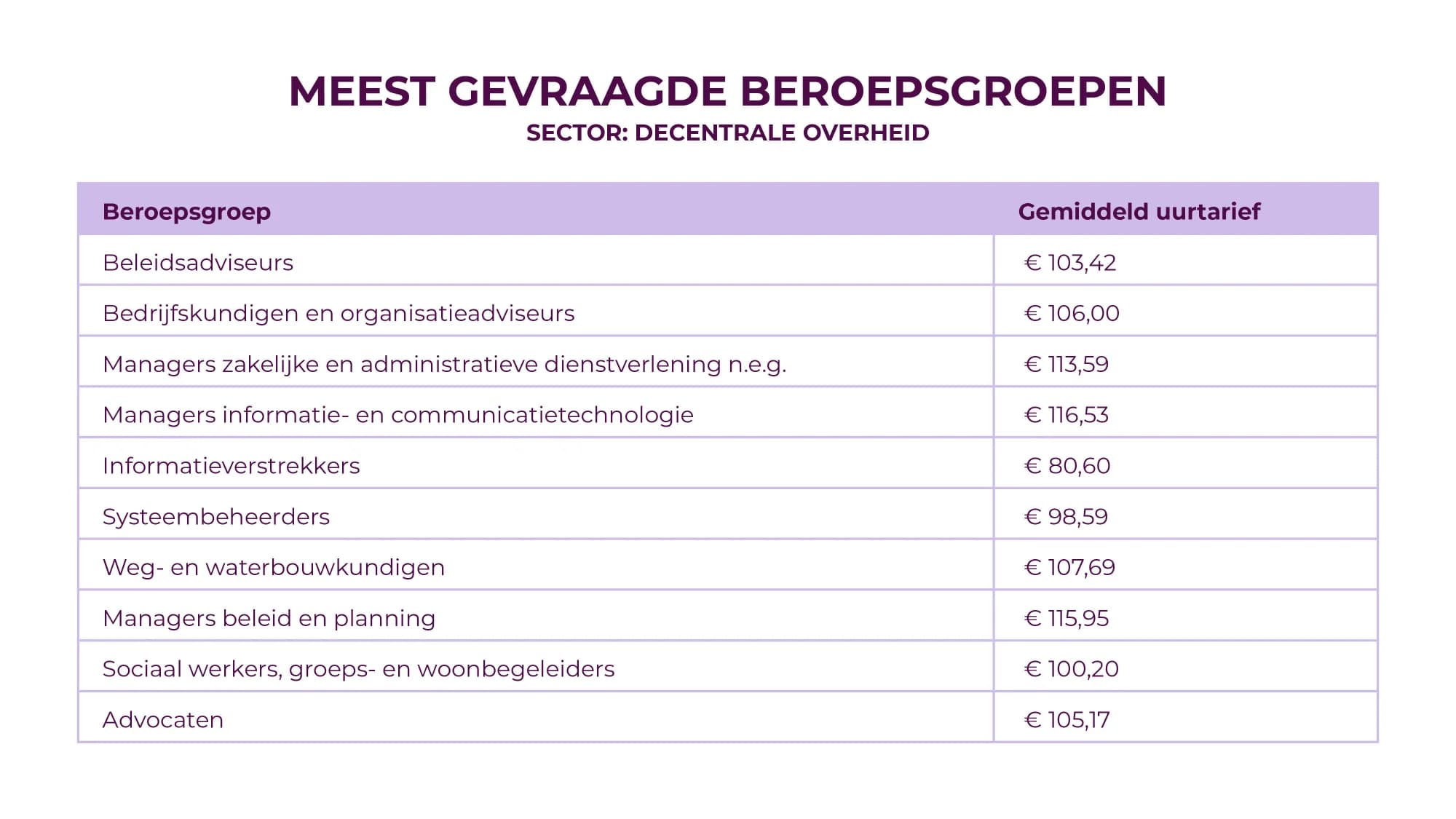
Whereas the central government mainly has structurally high rates for IT and policy profiles, the local government offers a broader range of positions, from policy advisors and organizational consultants to social workers and technical specialists. This difference in profile mix and focus on local policy and implementation also partly determines the variation in hourly rates and fluctuating demand.
Dealing smartly with limited expertise
As a client, it is important for you to respond to this adequately by planning carefully. Identify early on what knowledge you need and when, so that you can complete assignments on time. Also take a critical look at how you deploy expertise. Sometimes a short assignment is sufficient for a specific challenge, while at other times it is wiser to have a professional work on a project for a longer period of time.
By looking ahead and strategically coordinating your efforts, you can keep projects on track and avoid delays.
Talent Monitor: insight into the decentralized market
The Talent Monitor, a joint publication by HeadFirst Group and Intelligence Group, tracks developments in rates, demand, and expertise on a quarterly basis. For decentralized government, the research confirms a clear picture: the need for policy and IT profiles remains high, rates have been rising for several years, and the number of assignments fluctuates greatly.
This means that strategic use of external expertise is becoming increasingly important for clients. Those who anticipate in a timely manner and deploy flexibly can continue to effectively realize projects and policy goals, even in a tight market.