


Banner Mask

Organizations are investing in digitization, automation, and more efficient supply chains. As a result, there is a growing need for professionals who can bridge the gap between technology, processes, and business operations.


Download Talent Monitor

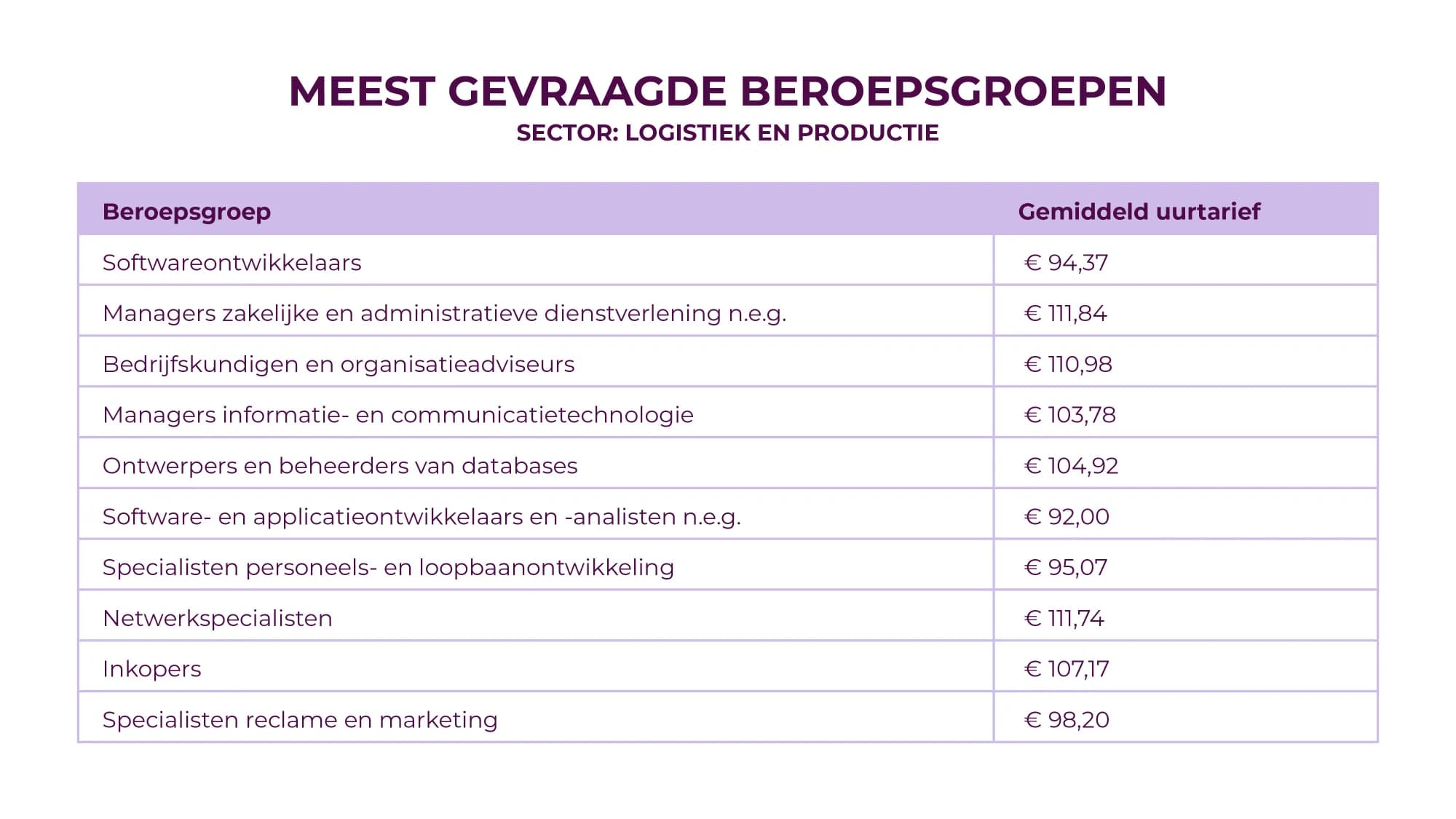
According to the Talent Monitor, IT profiles and organization-oriented positions are particularly well represented. Software developers, database specialists, network specialists, and application developers form the technical basis of many projects. At the same time, organizational consultants and managers within business and administrative services support change processes and process improvement.

Purchasers and HR specialists also play a role in these developments. They help organizations strengthen teams and improve collaboration within complex supply chains. The range of rates reflects the breadth of demand. Software and application developers earn an average of around €92 to €94 per hour. Network specialists and management roles command higher rates, with hourly rates exceeding €111. These differences demonstrate that both technical expertise and organizational leadership remain crucial for companies in the logistics and manufacturing sectors.

Most in-demand job categories: logistics and manufacturing

Source: CBS, compiled and analyzed by the Intelligence Group

The range of rates reflects the breadth of demand. Software and application developers earn an average of around €92 to €94 per hour. Network specialists and management roles command higher rates, with hourly rates exceeding €111. These differences demonstrate that both technical expertise and organizational leadership remain crucial for companies in the logistics and manufacturing sectors.

Rates are moving towards €100 per hour

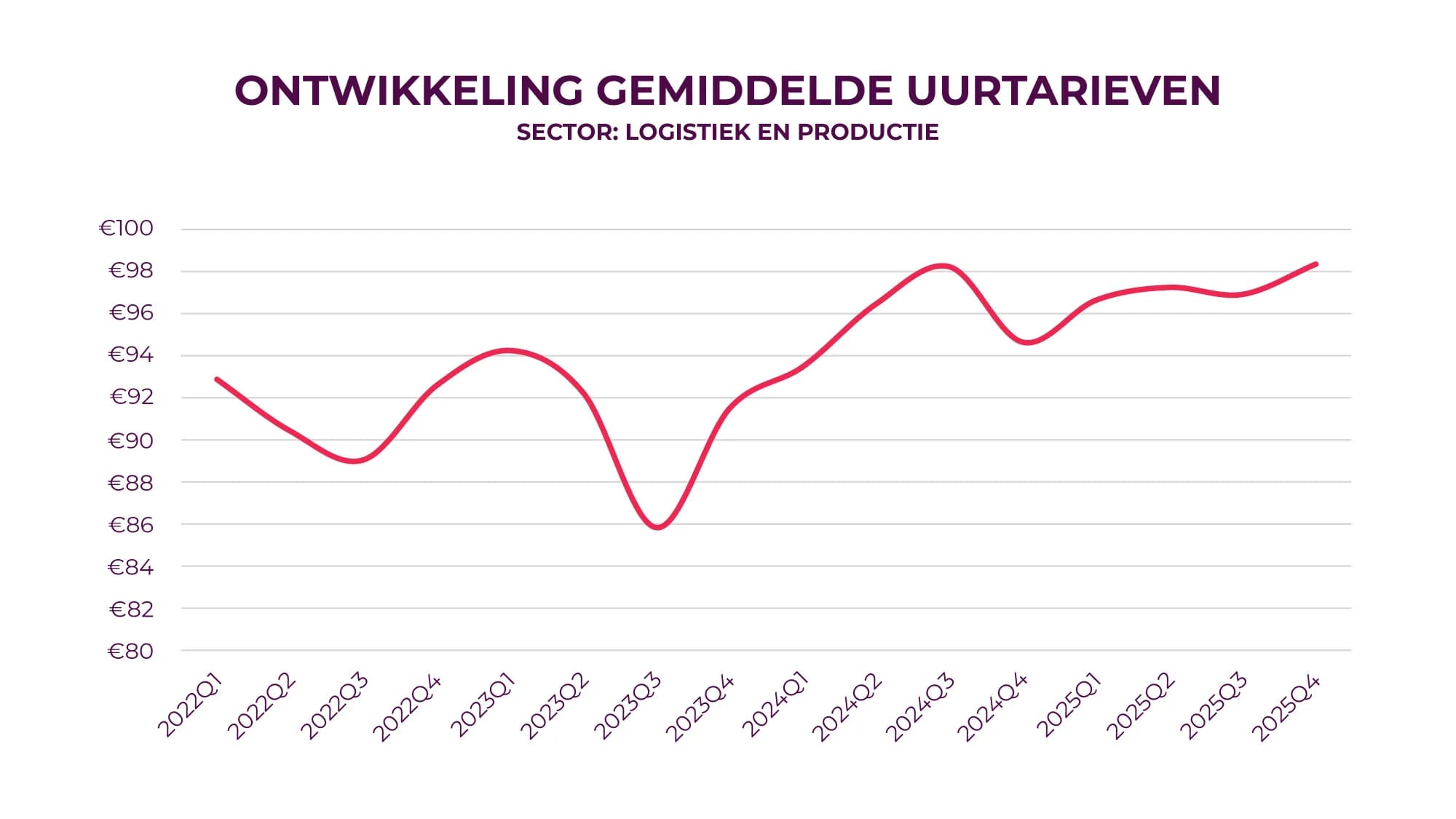
The development of rates shows a slight upward trend. In 2022, average hourly rates ranged between €89 and €93. In the following years, rates rose gradually.

In 2024, rates moved toward €96 to €98 per hour. And by the end of 2025, the average hourly rate stabilized around €97 to €98. These trends fluctuate slightly. In some periods, rates decline slightly; in others, they rise by just over 4%. This development is consistent with a sector that is strongly influenced by economic conditions. When investments in digitization and automation increase, the demand for specialist knowledge grows. Uncertainty in international trade or changing market conditions can also influence project budgets. 

Trends in average hourly rates: logistics and manufacturing

Source: CBS, compiled and analyzed by the Intelligence Group

Demand for professionals declines after peak years

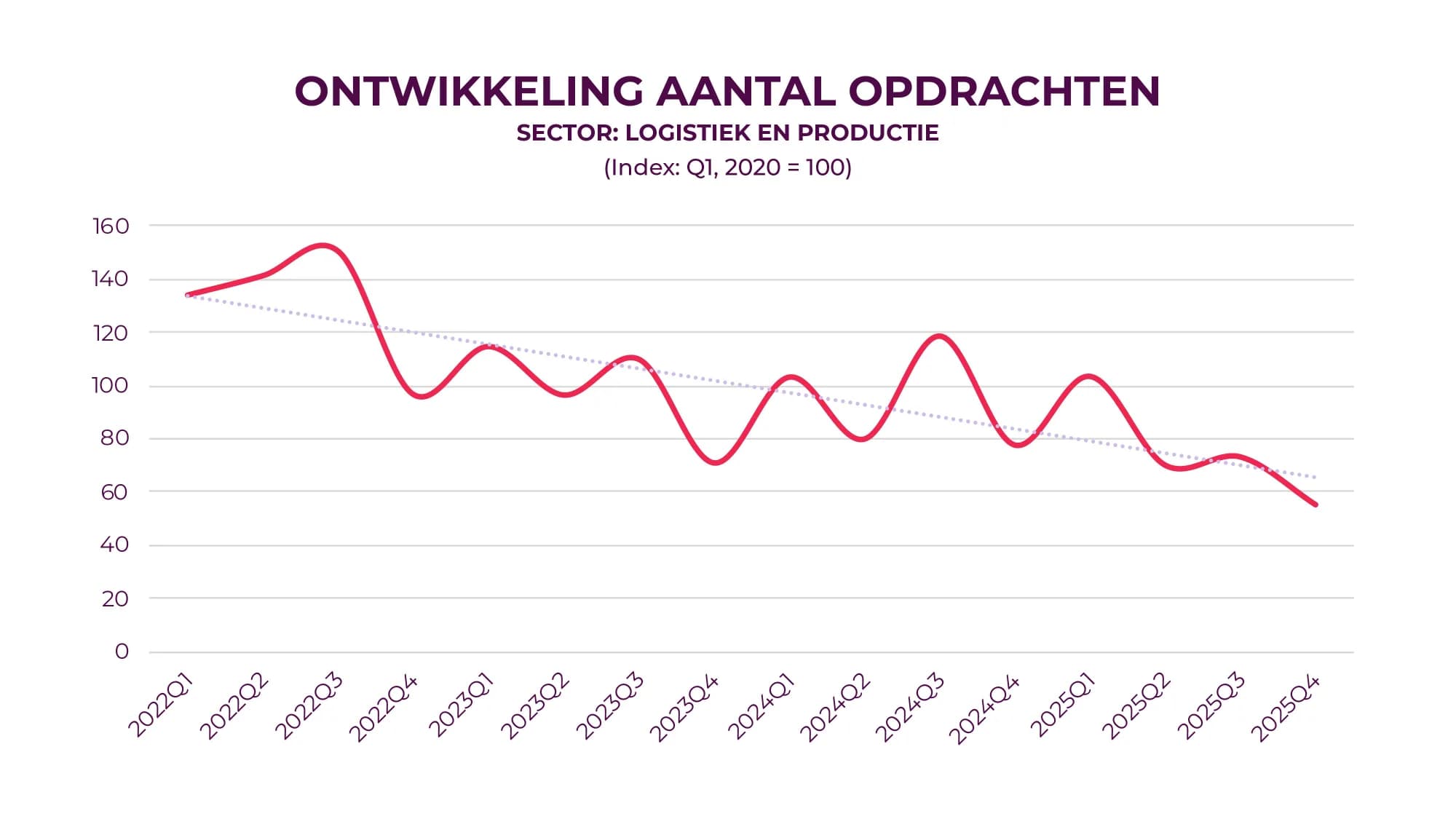
Demand for professionals also shows a clear trend. In 2022, the number of assignments remained high, with some quarters exceeding 500 assignments.

In the years that followed, the volume declined. In 2023, the average number of assignments dropped to approximately 350. In 2025, this average stood at around 269 assignments, and the fourth quarter totaled approximately 197 assignments. This decline demonstrates how strongly the sector reacts to economic developments. Logistics flows, production volumes, and international trade have a direct impact on investments and projects. 
Trend in the number of orders: logistics and manufacturing

Source: CBS, compiled and analyzed by the Intelligence Group

Technology is changing the sector

Companies are investing in data-driven planning, automation, and new technologies for warehouses and factories. In addition, organizations are facing stricter laws and regulations around sustainability and reporting, such as zero-emission targets and CSRD.

These developments require professionals who combine technical knowledge with process insight. IT specialists are increasingly working together with supply chain experts, data analysts, and organizational consultants. This means that external professionals not only add capacity, but also help to achieve innovation and efficiency. 

Targeted Use of External Expertise

The combination of technological developments and economic uncertainty calls for a strategic approach. It is wise to gain insight into your capacity needs early on: what expertise do you need, and when will the projects begin?

By planning ahead and making targeted use of external expertise, your organization will remain capable of implementing innovations and improving your supply chain. 

Talent Monitor: insight into logistics and production

The Talent Monitor, a joint publication by HeadFirst Group and Intelligence Group, tracks developments in demand, rates, and expertise in various sectors on a quarterly basis.

The research paints a clear picture in the logistics and production sector. Rates are slowly rising, while the number of assignments has been declining since 2022. At the same time, the need for IT and supply chain professionals remains, especially for projects related to digitization, automation, and process improvement. This means that strategic planning and the flexible deployment of expertise are becoming increasingly important. Those who respond to these developments in a timely manner will remain able to improve processes and organize the supply chain efficiently.