


Banner Mask

The pressure to become more sustainable, digitize networks, and realize complex projects poses significant challenges for organizations in the energy and utilities sector. Business administrators, organizational consultants, ICT managers, database experts, network specialists, and software developers are established professionals within this sector. However, the demand for business and administrative service managers, process operators, and commercial profiles also remains high.


Download Talent Monitor

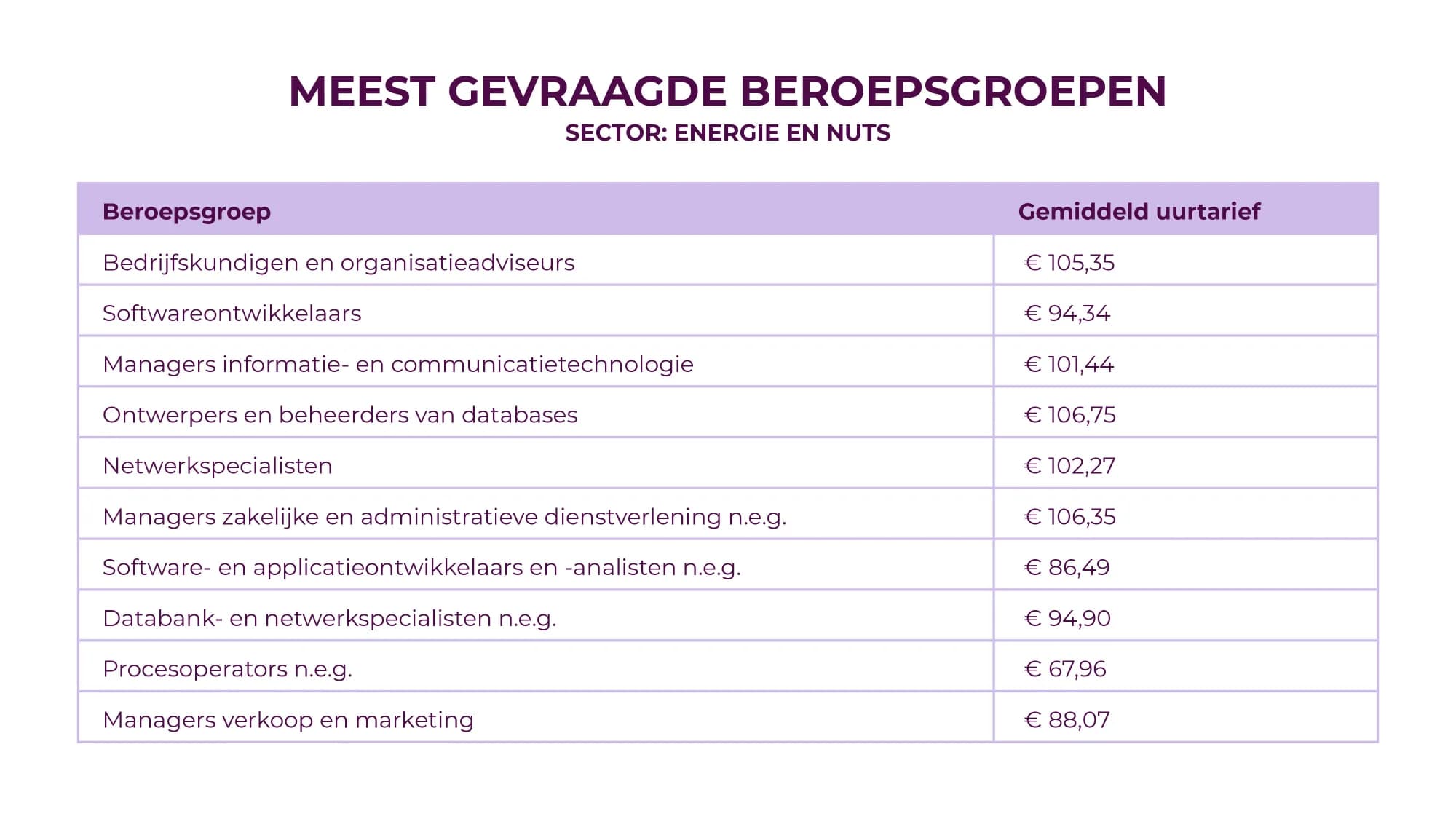
Salaries clearly show where expertise is scarce. Process operators earn an average of €68 per hour, while specialized IT managers and database administrators see their rates rise to over €106 per hour. They are followed by business administrators and organizational consultants with an average hourly rate of €105.  

These figures come from the latest Talent Monitor by HeadFirst Group and Intelligence Group, which maps current labor market data from various sectors. This research clearly shows that digital knowledge and practical experience with transitions make all the difference, especially now that the energy and utilities sector needs to become more sustainable and digitize. 

Most in-demand occupational groups: energy and utilities

Source: CBS, compiled and analyzed by the Intelligence Group

Rising rates: a structural pattern

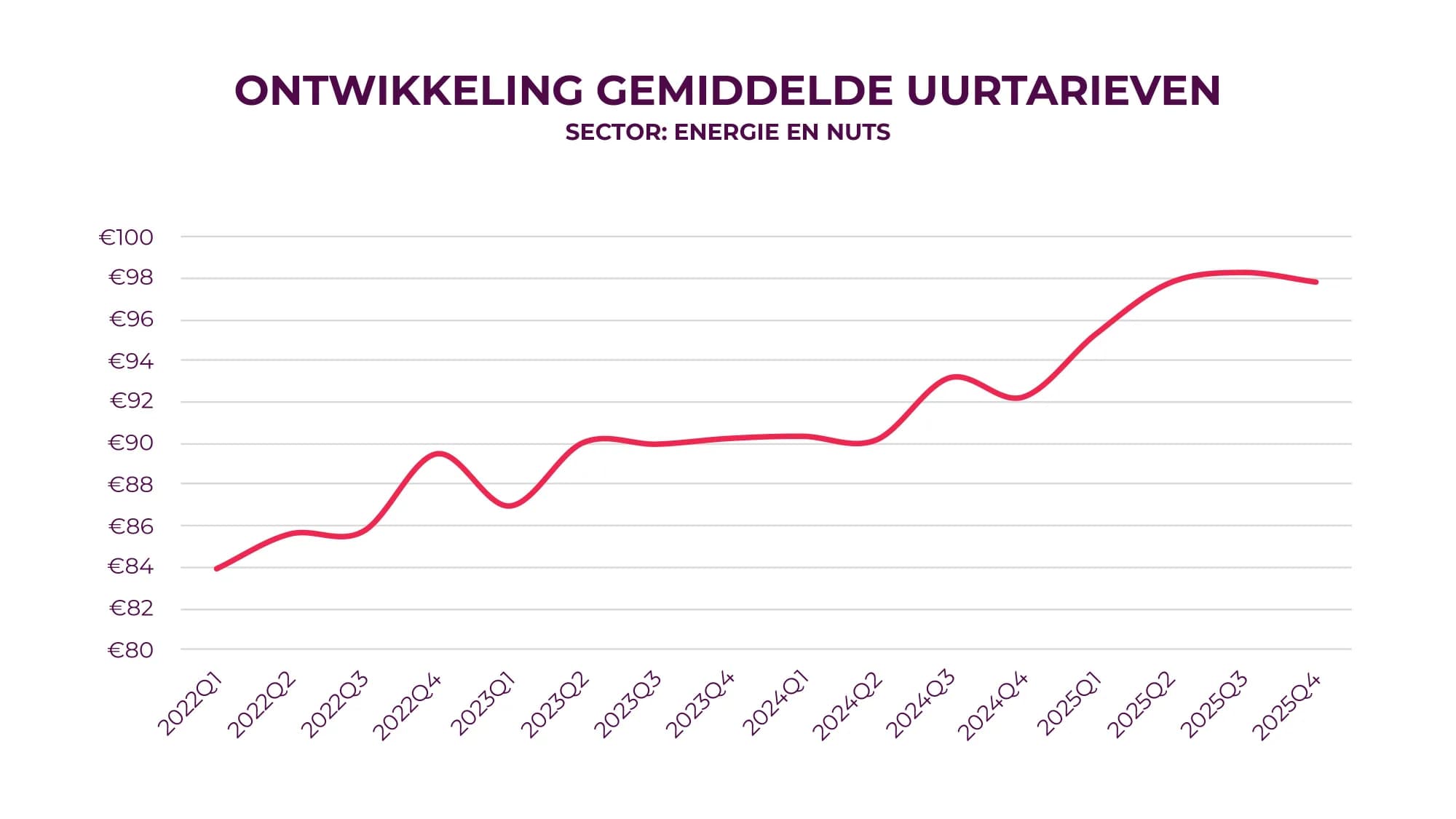
Hourly rates within the energy and utilities sector are growing steadily. While the average hourly rate in 2022 was around €84, by the end of 2025 it had risen to almost €98. Compared to the end of 2024, this was an increase of 6.4%. The increase varies annually between 1% and 8%, with peaks in specialist positions such as data, networks, and software development.  

Securing talent in a timely manner, recruiting based on skills, and strategically deploying external professionals helps you to ensure continuity. For self-employed professionals, it confirms their strong position: those with specialist knowledge can charge above-market rates and remain attractive to clients. 

Trends in average hourly rates: energy and utilities

Source: CBS, compiled and analyzed by the Intelligence Group

Demand patterns: cyclical but consistent

The number of assignments for freelancers shows a recognizable cyclical pattern. Strong first quarters are followed by a slowdown towards the end of the year. Demand peaked at 784 assignments in the first quarter of 2023 and at 736 in Q1 2025, before falling to 417 assignments in the fourth quarter of 2025. Despite these fluctuations, the average number of assignments remains fairly stable, with an average of 596 in 2022 and 575 in 2025.

The pressure points are mainly in IT and change profiles. This requires flexibility: agile hiring, targeted prioritization, and retaining talent pools ensure that transition and maintenance programs continue to run smoothly. 
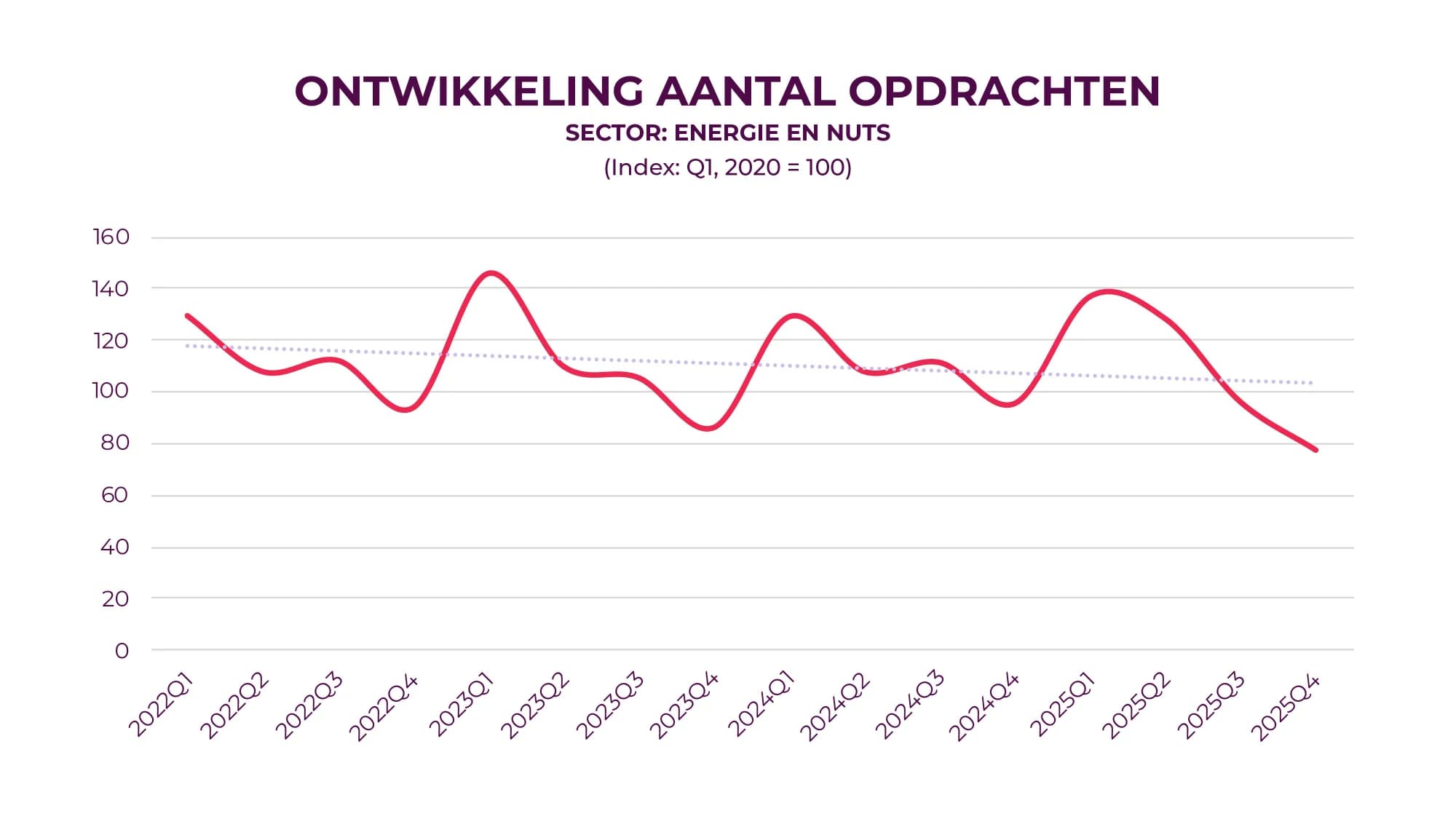
Trend in the number of contracts: energy and utilities

Source: CBS, compiled and analyzed by the Intelligence Group

Strategic value of external professionals

Companies in the energy and utilities sector will need to take a strategic approach to external hiring. This starts with identifying skills and building talent pools in a timely manner. The Talent Monitor shows that specific knowledge is scarce and that the well-planned deployment of external professionals supports the continuity and success of your projects. A targeted approach helps you retain these professionals and make optimal use of their knowledge in complex projects, digitization processes, and sustainability programs.