


The central government remains heavily dependent on specialized knowledge. IT professionals in particular play a key role in major programs involving digitization, data, and information security. The latest edition of the Talent Monitor shows that demand for these professionals remains structurally high, while the availability of experienced professionals is under pressure and rates for these specialist profiles have been rising for several years.
This means that finding the right expertise requires increasing attention.
IT profiles dominate demand
Software developers, system and network administrators, database experts, and application developers form the backbone of many projects. They support organizations in developing, managing, and modernizing digital systems.
In addition to these technical roles, consultants also remain important. Organizational consultants and policy advisors often work on major change processes or provide support for policy developments and implementations.
Source: CBS, compiled and analyzed by the Intelligence Group
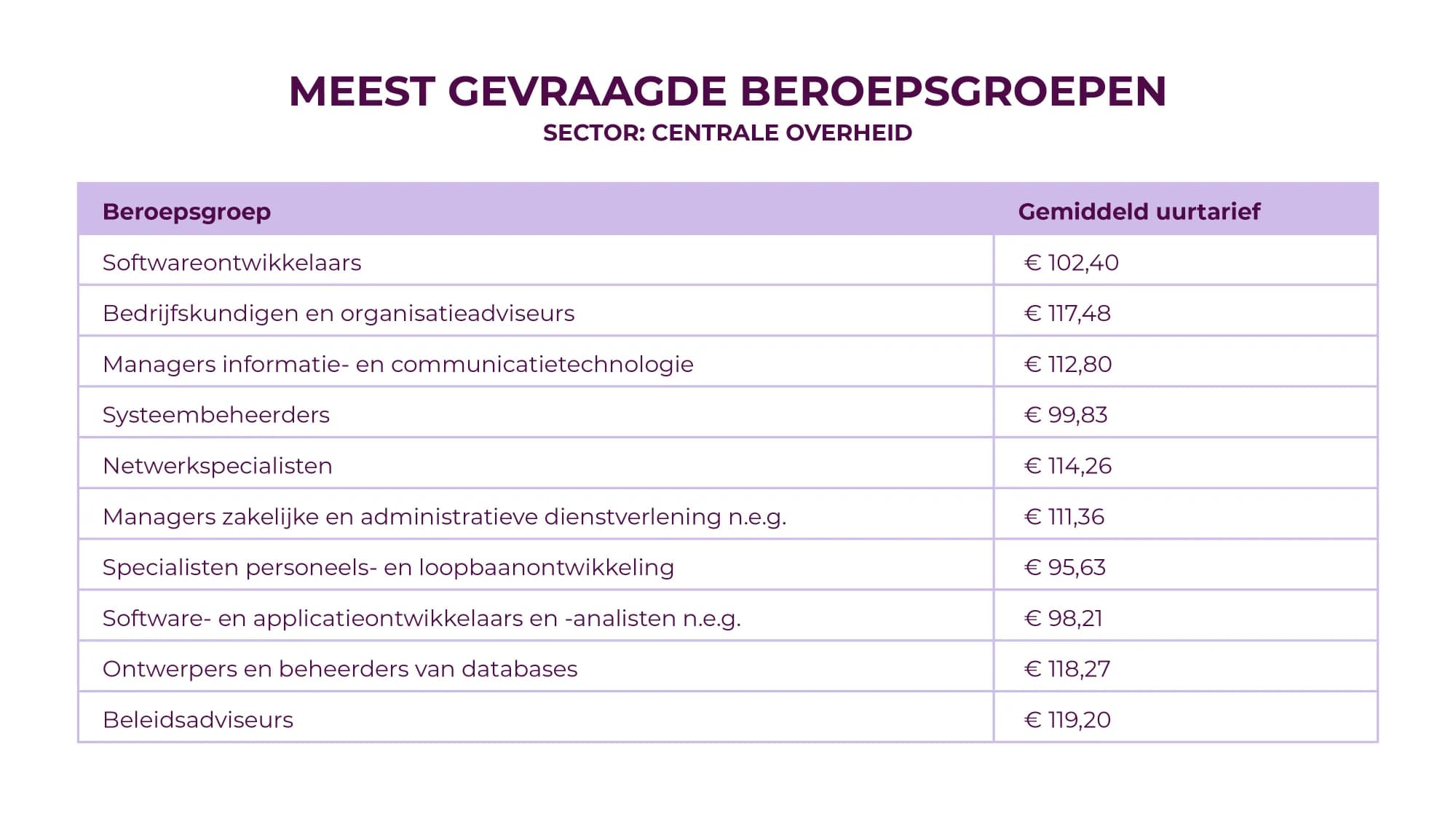
The combination of policy knowledge and technological expertise makes these profiles scarce. As a result, hourly rates are relatively high, averaging between €95 and €119.
The Talent Monitor also shows that software developers are the most sought-after professional group. Their average rate is around €102 per hour. For organizational and business consultants, that amount is higher, averaging over €117 per hour. These rates reflect not only scarcity, but also the strategic importance of these roles within government organizations.
Rates have been rising for several years
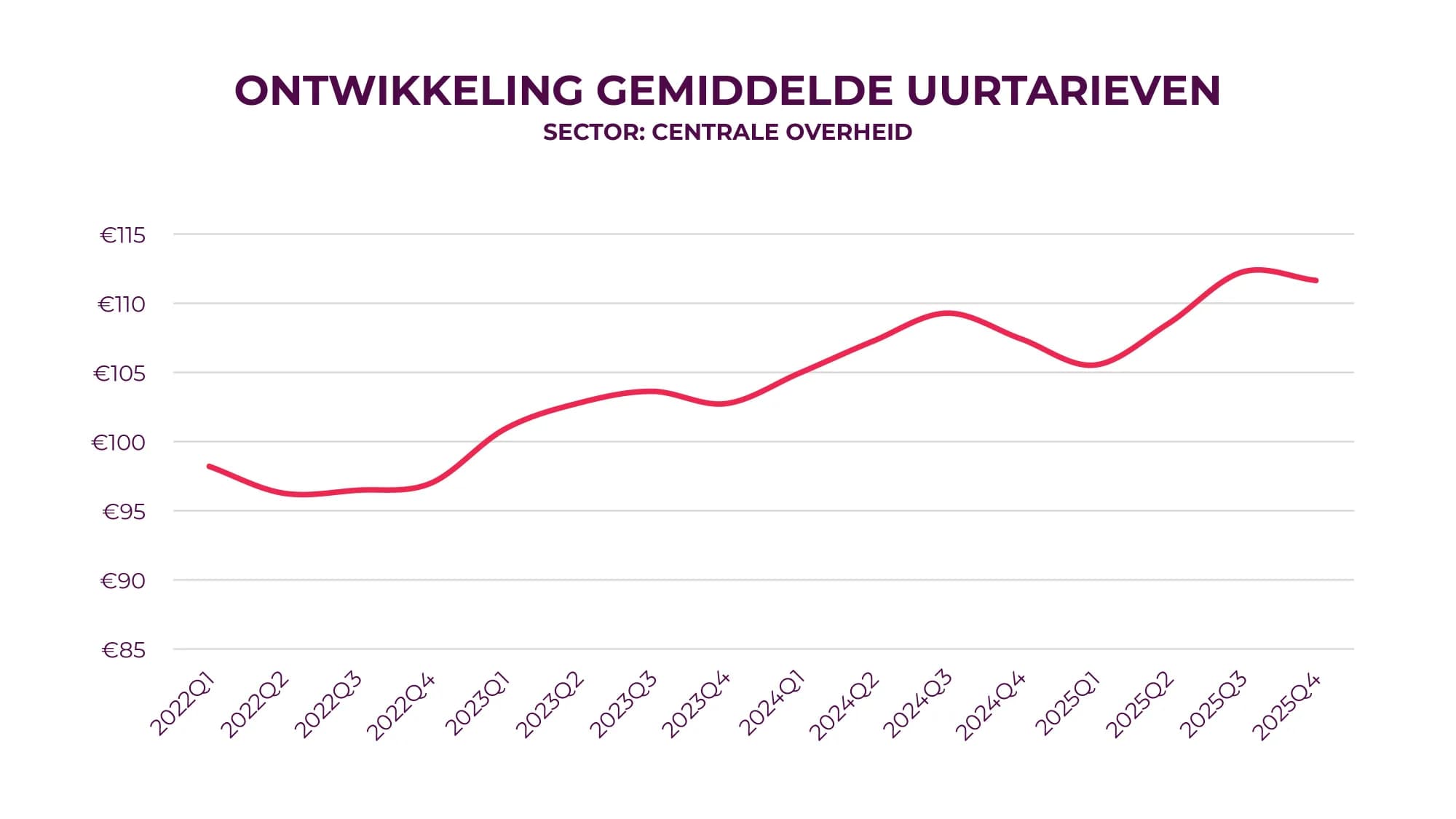
The development of rates shows a clear trend. Since 2022, hourly rates have been rising almost every year.
In 2022, the average rate for central government was around €96 per hour. In 2024, the average was €107, and in 2025, it rose further to €109. At the end of that year, the average hourly rate was even €111.
This increase confirms a trend that has been visible for some time: the annual rate increase usually ranges between 2% and 4%.
For clients, this means that specialist knowledge is becoming structurally more expensive.
Source: CBS, compiled and analyzed by the Intelligence Group
Fewer assignments after strong years
Although rates continue to rise, the number of assignments paints a different picture.
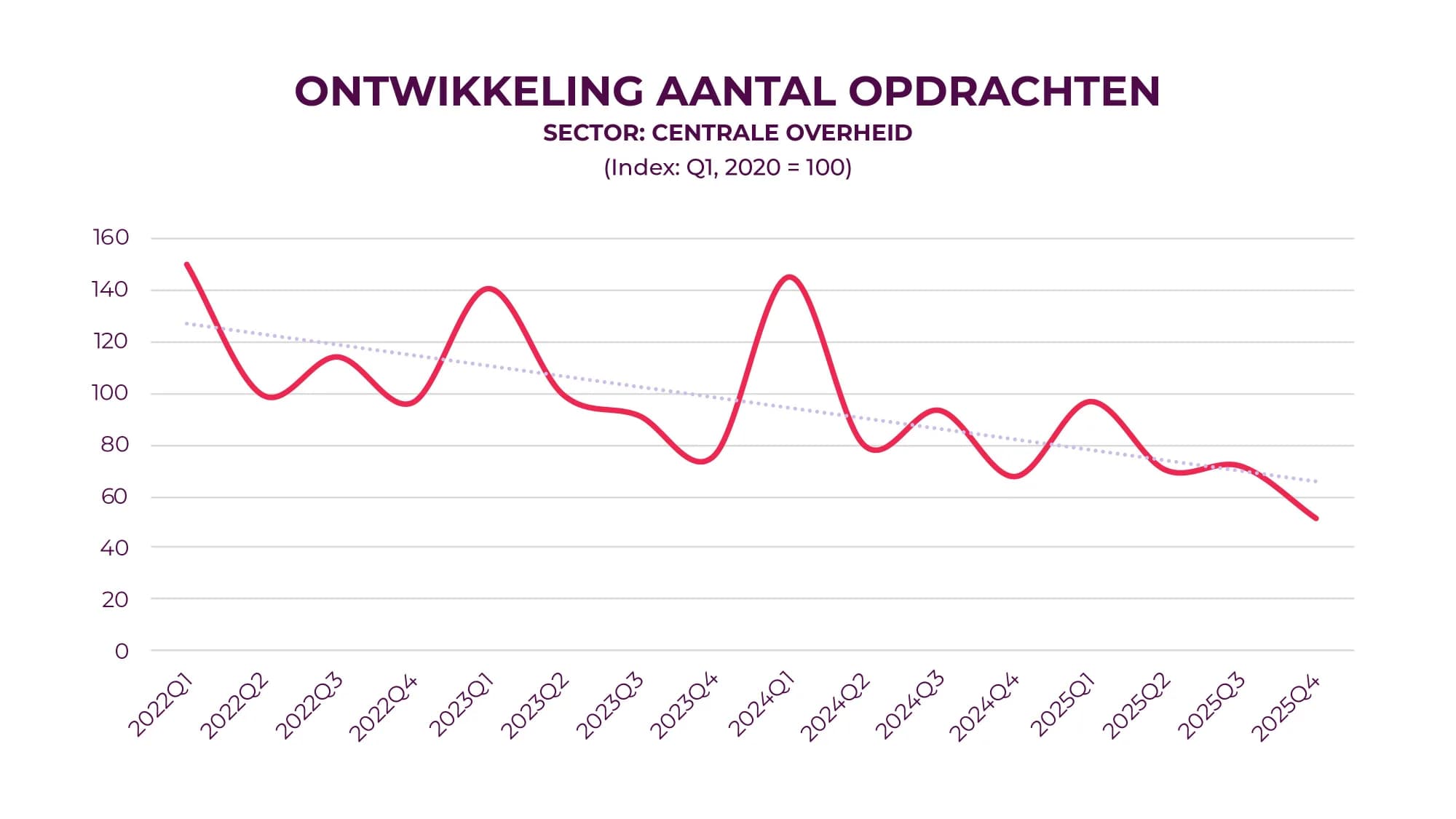
After a strong 2022 and a powerful start to 2023, the volume of assignments is clearly declining. At the beginning of 2023, nearly 1,200 assignments were posted, while 2025 started with approximately 795 assignments. This decline continues throughout the year. In the fourth quarter of 2025, the number of assignments will be 424.
The index figures from the Talent Monitor show the same downward trend. Demand remains, but organizations are placing fewer assignments than in the peak years.
Source: CBS, compiled and analyzed by the Intelligence Group
Explanation for the decline
There are several factors that explain this development. Government organizations are tightening their hiring policies and taking a more critical look at their external hiring. Budget constraints also play a role. Some projects are starting later or being temporarily postponed.
However, this does not mean that the need for expertise is disappearing. On the contrary, many programs within the central government remain dependent on specialized knowledge in the fields of IT, organization, and policy.
As a result, the challenge is shifting from volume to targeted deployment. It is less about the number of assignments and more about finding exactly the right expertise.
Strategic management of scarce knowledge
The combination of rising rates and a tighter supply of professionals calls for strategic planning.
Assess your capacity requirements in good time, plan ahead, and ensure you know where expertise is needed and when.
Also, remain flexible in the way you deploy external expertise. Some assignments require temporary specialist knowledge. Other projects benefit from longer-term collaboration with experienced professionals.
Talent Monitor: insight into a changing market
The Talent Monitor, a joint publication by HeadFirst Group and Intelligence Group, charts these developments every quarter. The data shows how demand, rates, and available expertise are developing within different sectors.
For the central government, our research confirms a clear picture. IT and consulting profiles remain scarce. Rates have been rising for several years in a row and the number of assignments is declining.
This means that strategic use of external expertise is becoming increasingly important. Those who understand the market well and anticipate changes in a timely manner will remain able to successfully implement important programs and projects.